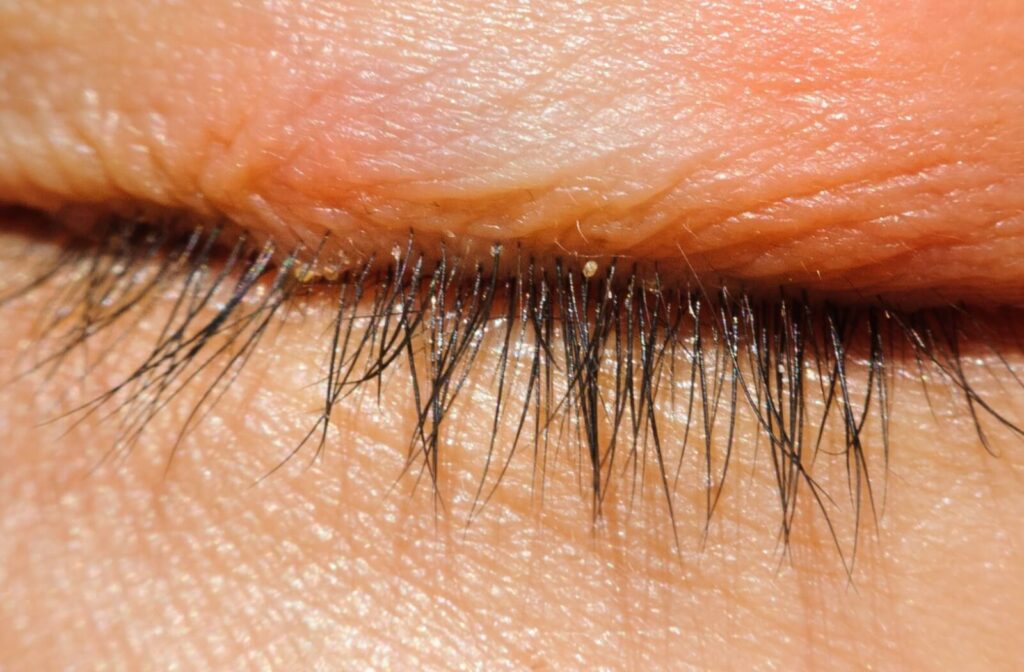
Blepharitis can be frustrating, disruptive, and difficult to manage. When you’re dealing with that sudden redness or seeing the flakes on your eyelashes, it may feel like a contagious condition, much like pink eye, but that’s simply not the case. Blepharitis itself is not contagious. However, the bacteria or mites that cause it could transfer across shared items like makeup, towels, or bedsheets.
Whether it’s watery eyes making it hard to see or a persistent dryness that interrupts your day, being aware of this common eyelid condition is key to managing it effectively. Your eye doctor can help you understand what you’re going through with a comprehensive eye exam.
What Is Blepharitis?
Blepharitis refers to chronic inflammation along the edges of your eyelids. When the delicate balance of eyelid health is disrupted, it can lead to redness, irritation, and discomfort. It’s often associated with bacterial overgrowth, blocked oil glands, or underlying skin conditions like rosacea or dandruff.
There are 2 primary types of blepharitis:
Anterior blepharitis: This type impacts the outer edge of the eyelid, near the base of your eyelashes. Often caused by bacteria or skin conditions like dandruff, anterior blepharitis is primarily visible on the surface of the eyelid.
Posterior blepharitis: This type affects the inner edge of the eyelid, which directly touches the eye. It’s linked to dysfunctional oil glands, which can block lubrication and lead to inflammation. Skin conditions such as rosacea or seborrheic dermatitis are frequently involved.
While blepharitis doesn’t have a cure, maintaining a consistent care routine can help not only manage symptoms but also keep your eyes feeling healthier.
Can Blepharitis Spread?
Here is where it gets a bit more complex. While blepharitis itself isn’t contagious, some of the factors related to its onset, like bacteria or microscopic mites, can be transferred between people. Close contact or shared items like face towels, makeup, or pillowcases may potentially spread these irritants.
It’s important to note that exposure alone doesn’t guarantee blepharitis. Most people already have the bacteria that can cause blepharitis on their eyelids. The problem is when there is too much of it.
Factors like personal hygiene, immune response, and underlying skin conditions determine whether symptoms will develop. Preventing potential flare-ups starts with good hygiene and taking care to avoid sharing personal items.
For example:
Wash your hands frequently before touching your eyes.
Avoid sharing makeup or makeup brushes.
Use fresh, clean pillowcases and towels regularly.
Your efforts today can significantly lower the likelihood of irritation tomorrow!
Blepharitis Signs & Symptoms to Watch For
Blepharitis can manifest in a variety of ways. If you notice 1 or more of these signs, it may be time to take action:
Red, swollen, or itchy eyelids
Burning or stinging sensations in the eyes
Crusted or flaky buildup at the base of the eyelashes
Excessive tearing or watery eyes
A gritty or sandy feeling, as if something is in your eye
In some severe cases, blepharitis could cause eyelashes to fall out or the cornea to swell. Symptoms are often the most disruptive in the morning, due to crust accumulating overnight.
Without treatment, blepharitis may lead to more advanced complications like recurring styes, dry eye, or corneal damage. Early detection is a crucial step in managing this condition effectively.